

China Travel Guide: What First-Time Visitors Need to Know
China is an extraordinary destination for travelers. From the imperial palaces and the Great Wall in Beijing to the ancient history of Xi’an, the modern skyline of Shanghai, the giant pandas of Chengdu, and the spectacular landscapes of Yunnan and Guangxi, the country offers an incredible variety of experiences.
However, visiting China for the first time involves more than deciding which attractions to visit. International travelers also need to understand how to enter the country, make payments, access the internet, book hotels, use public transportation, and communicate in everyday situations.
China’s travel environment is different from what many visitors may be familiar with, particularly when it comes to mobile payments, digital services, transportation bookings, and daily life. Preparing these essentials before departure can make your trip much smoother.
This China travel guide focuses primarily on mainland China. Hong Kong and Macao have separate entry arrangements, transportation systems, and other travel requirements, so visitors planning to include these destinations should check their respective regulations.
1. Understanding China Before Your Trip
Before planning your itinerary, it helps to understand three important characteristics of traveling in China.
China Is a Vast Country
China is geographically enormous, and its regions differ significantly in climate, culture, food, landscapes, and travel experiences.
Beijing and Xi’an are ideal for exploring Chinese history and traditional architecture. Shanghai offers a modern urban experience, while Chengdu is famous for giant pandas, Sichuan cuisine, and its relaxed lifestyle. Yunnan, Guangxi, Guizhou, and other regions offer spectacular natural scenery and distinctive local cultures.
It is not necessary to visit every famous destination in one trip. If you only have a week, trying to cover Beijing, Shanghai, Chengdu, Chongqing, and Yunnan may leave you spending more time traveling between cities than actually enjoying them.
Mobile Technology Plays an Important Role in Daily Life
Mobile payments, ride-hailing services, online ticket reservations, food delivery, and digital navigation are widely used in many Chinese cities.
For international visitors, preparing a smartphone, payment methods, and essential travel apps before arrival is particularly important.
Travel Experiences Vary Between Cities
Major international cities such as Beijing, Shanghai, and Guangzhou generally have well-developed tourism infrastructure. Smaller cities, county-level towns, and remote destinations may offer fewer English-language services and more limited international payment options.
If this is your first visit, starting with major cities that have convenient transportation and established tourism services can make independent travel easier.
2. When Is the Best Time to Visit China?
Because China covers a large geographical area, the best time to visit depends on your destination and the activities you have planned.
In general, spring and autumn are comfortable seasons for visiting many parts of the country. However, there is no single best travel season for all of China.
| Season | Approximate Months | Travel Characteristics |
|---|---|---|
| Spring | March to May | Warmer weather, flowers, city sightseeing, and outdoor activities. |
| Summer | June to August | Good for some northern and mountain destinations, although many southern cities can be hot and humid. |
| Autumn | September to November | Comfortable temperatures in many regions, colorful landscapes, and excellent conditions for sightseeing. |
| Winter | December to February | Snow and ice tourism in northern China, while some southern destinations remain relatively mild. |
Spring: A Great Season for Cities and Nature
Spring brings warmer temperatures and blooming flowers to many parts of China.
Beijing, Hangzhou, and Suzhou are popular destinations for visiting parks, gardens, and historical neighborhoods during this season.
Travelers interested in natural scenery can also consider Yunnan and Guilin. However, temperatures and rainfall vary considerably between regions, so check the local forecast before packing.
Summer: Explore Mountains and Northern Destinations
Summer is a popular travel season, especially for families and visitors taking longer holidays.
However, cities such as Beijing, Xi’an, and Chongqing can experience high temperatures. If you prefer cooler weather, consider mountain destinations, grasslands, and some northern regions.
Summer is also the rainy season in parts of China. Travelers visiting mountainous areas should pay attention to weather forecasts and official attraction announcements.
Autumn: One of the Best Seasons for First-Time Visitors
Autumn is an excellent time to explore many parts of China.
Beijing’s autumn colors, the natural scenery of Sichuan and Yunnan, and the traditional landscapes of the Jiangnan region all offer memorable experiences.
For travelers who want to combine historical attractions, city sightseeing, and outdoor activities, autumn is particularly worth considering.
Winter: Discover a Different Side of China
Winter in northern China can be extremely cold, but it also creates opportunities for unique seasonal experiences.
Harbin is famous for its ice and snow attractions, while Beijing and surrounding areas offer a different atmosphere at the Great Wall during winter.
If you prefer warmer weather, consider destinations such as Hainan or southern Yunnan.
Be Aware of Chinese Public Holidays
Before booking your trip, check China’s public holiday calendar.
Major travel periods include:
- Chinese New Year (Spring Festival).
- Labor Day holiday in early May.
- National Day holiday in early October.
- The summer vacation period.
During these periods, popular attractions, railway stations, airports, and hotels can become significantly busier because of increased domestic travel.
If you prefer a more relaxed experience, consider avoiding major national holiday periods.
3. Best Places to Visit and Things to Do in China
China offers an enormous variety of destinations. For first-time visitors, it is helpful to choose destinations based on your interests, whether that means history, modern cities, natural scenery, traditional culture, or local food.
Here are some of the most rewarding places to consider when planning your first trip to China.
Beijing: Explore Chinese History and Traditional Culture

Beijing is China’s capital and one of the most rewarding destinations for first-time visitors.
The city combines imperial history, traditional neighborhoods, cultural landmarks, and modern urban life.
Recommended experiences include:
- Visit the Palace Museum (Forbidden City) to explore the history of China’s imperial dynasties.
- Walk along the Great Wall and experience one of China’s most famous historical landmarks.
- Visit the Temple of Heaven and learn about traditional Chinese ceremonial culture.
- Explore Beijing’s hutongs, the traditional narrow streets and residential neighborhoods.
- Try Peking duck and traditional Beijing street food.

For a first visit, consider spending three to four days in Beijing.
Shanghai: Experience Modern Chinese City Life

Shanghai has a very different atmosphere from Beijing.
The city is known for its modern business districts, historic architecture, shopping areas, restaurants, and vibrant urban culture.
Recommended experiences include:
- Walk along the Bund and enjoy views of the Huangpu River and the city’s famous skyline.
- Visit one of Shanghai’s observation decks to see the city from above.
- Explore Yu Garden and experience traditional Chinese garden design.
- Walk along Nanjing Road, one of the city’s best-known shopping streets.
- Explore Wukang Road and the surrounding historic neighborhoods.
Shanghai is also a convenient starting point for trips to nearby cities such as Hangzhou and Suzhou.
Two to three days is a reasonable amount of time for a first visit.
Xi’an: Discover Ancient Chinese Civilization
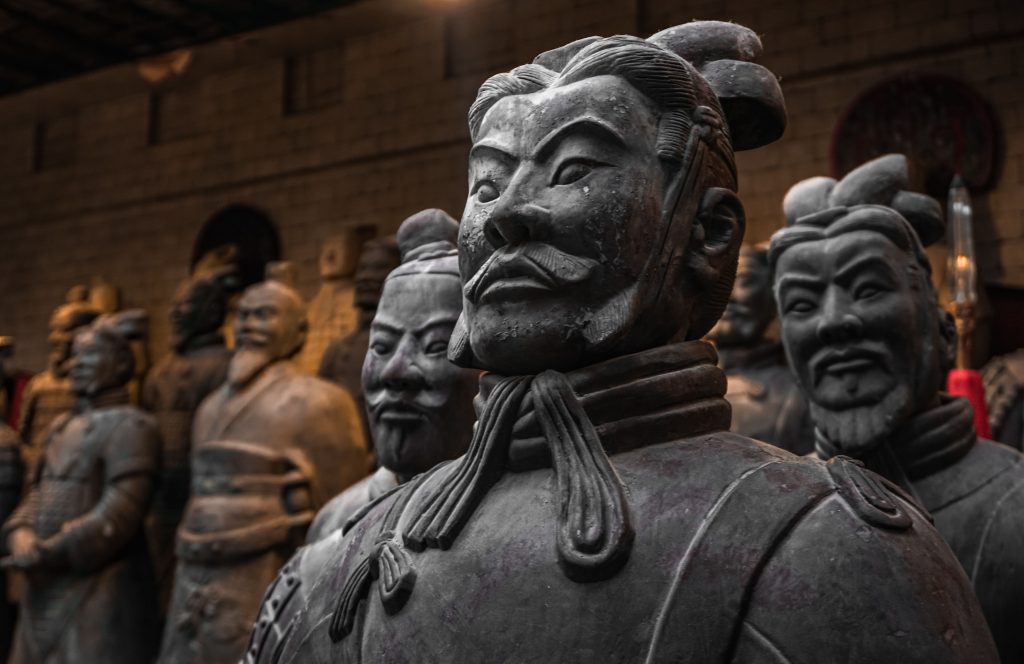
Xi’an was an important capital of several Chinese dynasties and is one of the country’s most significant historical destinations.
Its most famous attraction is the Mausoleum of the First Qin Emperor, home to the Terracotta Army.
Recommended experiences include:
- Visit the Emperor Qinshihuang’s Mausoleum Site Museum to see the Terracotta Warriors.
- Walk or cycle along the ancient City Wall of Xi’an.
- Visit the Giant Wild Goose Pagoda.
- Explore the Muslim Quarter and nearby food streets.
- Try local specialties such as biangbiang noodles, roujiamo, and yangrou paomo.
Xi’an is especially rewarding for travelers interested in history and archaeology. Consider spending two to three days in the city.
Chengdu: Giant Pandas, Sichuan Food, and a Relaxed Lifestyle

Chengdu, the capital of Sichuan Province, is one of southwestern China’s most distinctive travel destinations.
The city is famous for giant pandas, Sichuan cuisine, traditional teahouses, and a relatively relaxed lifestyle.
Recommended experiences include:
- Visit the Chengdu Research Base of Giant Panda Breeding.
- Experience traditional teahouse culture at People’s Park.
- Try Sichuan hot pot and other regional dishes.
- Explore Kuanzhai Alley (Wide and Narrow Alleys).
- Consider a day trip to nearby attractions such as the Leshan Giant Buddha.
Chengdu is a great choice for travelers who enjoy food, wildlife, and relaxed city experiences. Around three days is a good starting point.
Guilin and Yangshuo: Discover China’s Famous Landscapes

Guilin and Yangshuo are among China’s best-known natural destinations.
The region is famous for its dramatic karst mountains, rivers, countryside, and picturesque rural scenery.
Recommended experiences include:
- Take a boat trip along the Li River and enjoy the surrounding mountain scenery.
- Cycle or walk through the countryside around Yangshuo.
- Explore the Yulong River area.
- Visit traditional villages and experience local rural life.
Two to three days is a good amount of time for exploring Guilin and Yangshuo, depending on your preferred activities.
Zhangjiajie: Explore Spectacular Mountain Landscapes
Zhangjiajie, located in Hunan Province, is famous for its distinctive sandstone pillar formations.
It is an excellent destination for travelers interested in nature, hiking, photography, and dramatic mountain scenery.
Recommended experiences include:
- Explore Zhangjiajie National Forest Park.
- Enjoy the spectacular sandstone peaks in the Wulingyuan Scenic Area.
- Take the cable car on Tianmen Mountain.
- Visit the famous Tianmen Cave.
The scenic areas are extensive, and weather conditions can affect visibility and access. Consider allowing three to four days and checking official attraction announcements before your visit.
Yunnan: Discover Nature and Cultural Diversity in Southwestern China

Yunnan is one of China’s most rewarding provinces for longer trips.
It offers diverse landscapes, distinctive ethnic cultures, historic towns, and beautiful mountain scenery.
Destinations worth considering include:
- Kunming: A convenient city for exploring Yunnan and connecting to other destinations.
- Dali: Famous for Erhai Lake, its historic old town, and surrounding landscapes.
- Lijiang: Known for its historic old town and Naxi cultural heritage.
- Shangri-La: A destination for high-altitude landscapes and Tibetan cultural experiences.
Travel distances between destinations in Yunnan can be considerable. Consider spending at least four to seven days if you want to explore more than one area.
Other Chinese Cities Worth Visiting
| Destination | Main Attractions and Experiences |
|---|---|
| Chongqing | Mountainous city scenery, Hongyadong, hot pot, and spectacular night views. |
| Hangzhou | West Lake, Longjing tea, and traditional Jiangnan culture. |
| Suzhou | Classical Chinese gardens, waterways, and traditional architecture. |
| Nanjing | Ancient city walls, historical landmarks, and cultural attractions. |
| Huangshan | Mountain scenery, sea-of-clouds views, and traditional villages. |
| Guangzhou | Cantonese cuisine, dim sum, and Lingnan culture. |
You do not need to visit every famous destination in one trip. Choosing a few places that match your interests will usually provide a more enjoyable experience.
4. How Many Days Do You Need to Visit China?
Planning a trip to China requires careful consideration of travel distances between cities.
If you have limited time, it is usually better to focus on a few destinations rather than changing cities too frequently.
| Trip Length | Suggested Route | Best For |
|---|---|---|
| 5–7 days | Beijing and Xi’an | Travelers interested in history and traditional culture. |
| 8–10 days | Beijing, Xi’an, and Shanghai | First-time visitors who want a balanced introduction to China. |
| 10–14 days | Beijing, Xi’an, Chengdu, and Shanghai | Travelers who want to experience several different Chinese cities. |
| 14+ days | Beijing, Xi’an, Shanghai, and Yunnan or Guilin | Travelers who want to explore China more deeply. |
These itineraries are starting points rather than fixed schedules. Adjust them according to your international flights, domestic transportation, and personal interests.
One important tip: Do not fill every day with sightseeing. Many Chinese cities are worth exploring at a slower pace. Spend time in local teahouses, traditional neighborhoods, markets, and restaurants.
These everyday experiences can be just as memorable as visiting famous attractions.
5. China Visa and Entry Requirements
Visa and entry requirements are among the most important things to check before traveling to China.
China’s entry policies depend on your passport nationality, travel purpose, length of stay, and method of entry.
Living in a country does not automatically give you the same visa privileges as citizens of that country. Always check the rules that apply to the passport you will actually use.
Do You Need a Visa to Visit China?
China offers several different visa-free arrangements, including unilateral visa-free entry, bilateral visa exemption agreements, and visa-free transit policies.
According to the National Immigration Administration’s published list dated February 17, 2026, China’s unilateral 30-day visa-free policy covers ordinary passport holders from 50 countries for eligible purposes such as tourism, business, family visits, exchanges, and transit.
However, eligibility and policy validity periods vary. Some arrangements have specific expiry dates, and the rules may change.
Before booking your trip, check the latest official list of countries covered by China’s unilateral visa exemption policies.
If your passport or travel purpose does not qualify for visa-free entry, you should apply for the appropriate Chinese visa through the relevant Chinese embassy, consulate, or authorized visa application center.
China’s 240-Hour Visa-Free Transit Policy
China also operates a 240-hour visa-free transit policy, which is separate from the ordinary 30-day visa-free entry arrangements.
As of August 20, 2026, the policy covers eligible travelers from 57 countries. Qualified visitors can enter through designated ports and stay for up to 240 hours (10 days) within the permitted areas across 24 provincial-level regions.
Important conditions include:
- You must hold an eligible passport.
- You must be traveling to a third country or region rather than simply returning to your point of origin.
- You must hold a confirmed onward ticket with a confirmed departure date and itinerary.
- You must enter through an eligible port and remain within the permitted geographical areas.
- Work, study, and news reporting activities requiring prior approval are not covered by this transit arrangement.
Check the official 240-hour visa-free transit policy information before planning your itinerary.
Hainan’s Separate Visa-Free Policy
Hainan Province has a separate 30-day visa-free entry arrangement for eligible ordinary passport holders from 61 countries.
This policy has its own eligibility requirements and geographical restrictions. Travelers should not assume that entering Hainan under this arrangement automatically allows them to continue traveling elsewhere in mainland China without meeting the relevant entry requirements.
See the National Immigration Administration’s regional visa-free entry policy guidance for details.
China’s Online Arrival Card
Since November 20, 2025, foreign travelers have been able to submit their arrival information online before traveling to China through the National Immigration Administration’s official channels.
Available options include:
- The National Immigration Administration website.
- The NIA 12367 mobile app.
- Official WeChat and Alipay mini-programs.
- Other official government service channels.
If you cannot complete the form before departure, you can generally complete the process at the relevant Chinese immigration checkpoint using the available facilities or a paper arrival card, subject to applicable exemptions and procedures.
The official online arrival card service is free. Be careful of unofficial websites that charge fees for completing the form.
Use the official China arrival card submission website or read the National Immigration Administration’s arrival card guidance.
Documents to Prepare Before Departure
Depending on your nationality and travel arrangements, consider preparing:
- A valid passport.
- A Chinese visa, if required.
- Return or onward flight information.
- Hotel reservation details.
- Travel insurance documents.
- Digital copies of important travel documents.
Requirements can differ by nationality and visa category. Always follow the official instructions that apply to your circumstances.
6. Money and Mobile Payments in China
Mobile payments are extremely common in China.
In many cities, residents use smartphone apps to pay for shopping, restaurants, transportation, and everyday services.
The two most important payment platforms for international visitors to understand are Alipay and WeChat Pay.
Alipay
Alipay is one of the most useful payment options to prepare before arriving in China.
A typical setup process involves:
- Download the Alipay app.
- Register using an eligible mobile phone number or email address.
- Complete identity verification if requested.
- Link an eligible international bank card.
- Follow the instructions to scan a merchant’s payment QR code or display your own payment code.
Alipay provides an English-language interface and supports eligible international payment cards.
WeChat Pay
WeChat is one of China’s most widely used communication and social apps. It also includes WeChat Pay, which is used for many everyday transactions.
International visitors can register an account and try linking an eligible overseas bank card by following the app’s instructions.
Official guidance lists supported card networks such as Visa, Mastercard, American Express, JCB, and others. However, actual availability depends on the payment platform, issuing bank, card type, verification requirements, and transaction limits.
For more information, read the Chinese government’s guide to mobile payments for international visitors and the Shanghai government guide to using mobile payments.
Should You Still Carry Cash?
Yes.
Although mobile payments are widely used, China is not a completely cashless country. Cash is still available as a payment option, and international visitors can obtain Chinese yuan through banks, currency exchange services, and ATMs.
A practical payment setup includes:
- One primary mobile payment app.
- One international bank card that works in China.
- A small amount of Chinese yuan in cash.
Do not depend entirely on one smartphone. If your phone runs out of battery, your payment account needs verification, or you experience connectivity problems, having an alternative payment method can be extremely helpful.
7. Internet Access, SIM Cards, and Essential Travel Apps
Internet access is one of the most important things to prepare for your first trip to China.
Many everyday services in China rely on smartphones, including transportation, payments, navigation, food ordering, and ticket reservations.
Internet Access in Mainland China
China’s internet environment differs from that of many other countries.
Some international websites and apps may not be directly accessible through standard mainland Chinese internet connections. These may include certain Google services, Facebook, Instagram, WhatsApp, and YouTube.
If you rely on particular services, research your connectivity options before departure and make sure your arrangements comply with applicable laws and regulations.
How Can You Get Internet Access in China?
There are three common options for international travelers.
Option 1: International Roaming
If your existing mobile carrier offers roaming services in China, you can purchase a suitable data package before departure.
This is convenient because you can continue using your existing phone number without arranging a local SIM card immediately after arrival.
Option 2: eSIM
If your smartphone supports eSIM technology, you may be able to purchase an international data plan that covers China.
Before purchasing an eSIM, check:
- Whether your phone supports eSIM.
- Which regions are covered by the plan.
- Whether the package includes the services you need.
- How long the package remains valid.
- Whether there are data limits or speed restrictions.
Not all eSIM packages offer the same network access or services, so read the plan details carefully.
Option 3: A Local Chinese SIM Card
China Mobile, China Unicom, and China Telecom are the country’s major telecommunications operators.
Foreign visitors may be able to purchase local mobile services by presenting a valid passport or other accepted identification document. Available packages and application procedures vary by operator and location.
Essential Apps for Traveling in China
| App or Service | Main Purpose | Official Website |
|---|---|---|
| Communication, social services, and mobile payments. | ||
| Alipay | Mobile payments and selected transportation services. | Alipay |
| DiDi | Ride-hailing and local transportation. | DiDi |
| Amap (Gaode Maps) | Navigation, route planning, and public transportation information. | Amap |
| Baidu Maps | Maps, directions, and local navigation. | Baidu Maps |
| China Railway 12306 | Official railway ticket booking and train information. | 12306 English |
| Trip.com | Hotel, flight, and travel reservations. | Trip.com |
| Dianping | Restaurant recommendations and local consumer information. | Dianping |
| Translation Apps | Translate menus, signs, and everyday conversations. | Choose an app that supports offline translation. |
Google Maps may not provide consistently reliable navigation and local information in mainland China. It is a good idea to become familiar with Amap or Baidu Maps before your trip.
If you do not speak Chinese, save the Chinese names and addresses of your hotel, attractions, and important destinations on your phone.
A practical tip: Do not wait until you arrive at a Chinese airport to download and configure every app.
Whenever possible, register your accounts, complete identity verification, link your bank cards, and test essential services before departure.
8. Getting Around China
China has an extensive transportation network, including high-speed railways, domestic flights, metro systems, buses, taxis, and ride-hailing services.
For most international visitors, the most useful options are high-speed trains, city metros, and app-based car services.
China’s High-Speed Rail Network
High-speed rail is one of the most convenient ways to travel between many major Chinese cities.
The network connects numerous destinations and is particularly useful for medium-distance and some longer journeys.
International visitors can purchase tickets through China Railway 12306’s English website and other eligible booking channels.
Important points to remember:
- China uses a real-name railway ticketing system.
- Foreign travelers can purchase eligible tickets using valid passports.
- Your passport information must match the information used when booking.
- You should bring the same valid travel document used for the reservation when entering the station and boarding.
The official China Railway 12306 English FAQ explains accepted identification documents and ticketing procedures for foreign passengers.
City Metro Systems
Major cities such as Beijing, Shanghai, Guangzhou, Shenzhen, and Chengdu have extensive metro systems.
For visitors, the metro is often one of the most convenient ways to travel around urban areas.
In some cities, travelers can use transportation QR codes through Alipay or other supported local services. However, payment methods and ticketing arrangements vary between cities.
Some stations also have security screening procedures, so allow extra time when traveling during busy periods.
Ride-Hailing Services and Taxis
DiDi is a ride-hailing service that international visitors may find useful.
Depending on the service available in your location, you may also be able to book a car through transportation services inside Alipay or WeChat.
When using ride-hailing services:
- Check the vehicle’s license plate.
- Confirm that the driver and booking details match.
- Review the estimated fare in the app.
- Use official ride-hailing platforms whenever possible.
- Avoid accepting unsolicited transportation offers from strangers near airports or tourist attractions.
Domestic Flights
For long-distance journeys, domestic flights may be more practical than trains.
For example, when traveling between eastern China and southwestern destinations, compare the total travel time of flights and high-speed trains.
Remember to include airport transfers, security checks, and waiting time rather than comparing flight time alone.
9. Where to Stay in China
Your accommodation location can have a significant impact on how efficiently you travel.
For first-time visitors, consider choosing accommodation that offers:
- Easy access to a metro station.
- Restaurants, convenience stores, and other services nearby.
- Convenient transportation to major attractions.
- Clear information about passport registration for international guests.
- Payment methods that you can use.
Can Foreign Tourists Stay in Ordinary Hotels in China?
Yes.
It is important to correct a common misconception found in some travel videos: foreign visitors are not generally prohibited from staying in ordinary Chinese hotels.
In July 2024, the Chinese government announced measures to improve accommodation services for international travelers. The policy stated that online booking platforms and accommodation operators should not illegally advertise that they do not accept foreign guests or impose unreasonable qualification requirements.
However, because booking platforms and individual properties may still have different booking procedures, it is sensible to contact the hotel directly if you are uncertain whether it can process your passport registration.
See the Chinese government’s accommodation policy for foreign travelers.
What Do You Need When Checking Into a Hotel?
Foreign visitors generally need to present a valid passport or another accepted travel document at the hotel reception.
The hotel will handle the required accommodation registration procedures.
If you stay in a private home or other accommodation that is not a hotel, you or your host must complete the required accommodation registration with the local public security authorities within 24 hours of arrival.
For more information, consult the National Immigration Administration’s accommodation registration guidance.
10. Chinese Food and Dining Experiences
Chinese cuisine is incredibly diverse, and food traditions vary considerably between regions.
Eating only in one city means missing an important part of China’s culinary culture.
Popular Regional Chinese Dishes
- Beijing: Peking duck and zhajiangmian, noodles served with soybean paste.
- Sichuan: Mapo tofu, Sichuan hot pot, and other spicy dishes.
- Shaanxi: Roujiamo, biangbiang noodles, and yangrou paomo.
- Guangdong: Dim sum, Cantonese roast meats, and traditional morning tea.
- Shanghai: Xiaolongbao, shengjianbao, and Shanghai-style local dishes.
- Yunnan: Crossing-the-bridge rice noodles, mushroom dishes, and regional specialties.
How to Order Food in China
Some restaurants offer menus with photographs, but not every restaurant has an English menu.
It is useful to have a translation app that supports photo translation and voice translation.
If you are unsure what a dish contains, take a picture of the menu or ask the restaurant staff for an explanation.
What If You Have Food Allergies?
Food allergies deserve particular attention when traveling in China.
If you have a serious allergy to peanuts, nuts, seafood, dairy products, or other ingredients, consider taking the following precautions:
- Prepare a written explanation of your allergy in Chinese.
- Clearly identify the ingredients you must avoid.
- Ask whether a dish contains the relevant ingredients.
- Explain if cross-contamination could also cause a reaction.
- Choose restaurants where staff can communicate your requirements clearly.
If you have a severe food allergy, do not rely entirely on a translation app to decide whether a dish is safe.
Do Chinese Restaurants Serve Ice Water?
Some Chinese restaurants are more accustomed to serving hot water, room-temperature water, or tea rather than iced water.
This is not a universal rule, and practices vary between restaurants. If you prefer cold water, simply ask whether it is available.
Can You Drink Tap Water in China?
It is not recommended to drink untreated tap water directly.
The US Centers for Disease Control and Prevention (CDC) advises travelers that tap water in China is not drinkable, including in major cities. Sealed bottled water is widely available.
Choose bottled water or water that has been properly boiled and treated.
For additional guidance, see the CDC China Traveler View.
Basic Chinese Dining Etiquette
One traditional dining custom worth knowing is that you should avoid sticking chopsticks vertically into a bowl of rice.
This gesture is associated with traditional funeral and memorial rituals and is generally considered inappropriate at an ordinary meal.
Another difference is tipping. In most ordinary Chinese restaurants and everyday taxi services, tipping is not generally expected. Visitors do not need to follow the tipping customs common in countries such as the United States.
11. Public Restrooms and Everyday Life in China
Public restroom facilities vary depending on the city, building, tourist attraction, and location.
Modern shopping malls, airports, hotels, and many major tourist attractions generally offer Western-style toilets.
However, traditional squat toilets can still be found in some older public restrooms, traditional attractions, and rural areas.
Do not assume that every public restroom will have a Western-style toilet.
What Should You Carry?
It is useful to keep the following items in your day bag:
- Travel tissues.
- Wet wipes.
- Hand sanitizer.
- Personal hygiene products.
Some public restrooms may not provide toilet paper inside individual stalls. In some locations, visitors need to collect paper from a dispenser near the entrance.
Carrying your own tissues is a simple habit that can make everyday travel more comfortable.
If you use a wheelchair, travel with a stroller, or have mobility limitations, check the accessibility facilities at your hotel and planned attractions in advance.
12. Is China Safe for Tourists? Important Things to Know
China offers many different travel environments, from large cities and popular tourist attractions to rural communities, mountains, and remote destinations.
As with any international trip, visitors should maintain basic safety awareness and prepare for the specific conditions of their itinerary.
Pay Attention to Road Safety
When crossing city streets, watch for cars, electric bicycles, scooters, and pedestrians.
Do not assume a road is safe to cross simply because it looks quiet. Follow traffic signals and use designated pedestrian crossings.
Choose Transportation Services Carefully
Use official taxi services and reputable ride-hailing platforms whenever possible.
If you experience unusual charges, additional fees, or other disputes, keep your booking and payment records and contact the relevant platform’s customer service.
Keep Your Passport Safe
Your passport is an important identification document during your stay in China.
You may need it when boarding trains, checking into hotels, or entering certain attractions.
Keep your valid travel document secure and consider storing a separate digital copy of its important information.
Consider Travel Insurance
Choose travel insurance that matches your itinerary and planned activities.
If you plan to hike, climb mountains, participate in outdoor sports, or visit remote regions, check whether your policy covers those activities.
Emergency Phone Numbers in China
| Emergency Service | Telephone Number |
|---|---|
| Police | 110 |
| Medical Emergency / Ambulance | 120 |
| Fire Department | 119 |
Save these numbers before your trip so you can access them quickly if needed.
13. What Should You Pack for China?
You do not need to bring an excessive amount of luggage, but a few items are particularly useful for traveling in China.
Important Documents
- Passport.
- Visa or documents confirming your visa-free eligibility, where applicable.
- Flight and hotel reservation information.
- Travel insurance documents.
- Digital backups of important documents.
Electronic Devices
- Smartphone.
- Phone charger.
- Suitable travel plug adapter.
- Power bank.
- Spare charging cables.
China commonly uses a 220V, 50Hz electricity supply. Socket types may differ from those used in your home country.
Check whether your electronic devices support the local voltage and bring a suitable plug adapter.
Important Power Bank Rules for Domestic Flights
There is an important aviation regulation that international visitors should understand.
Since June 28, 2025, the Civil Aviation Administration of China has prohibited passengers from carrying power banks without a valid CCC mark, with unclear CCC markings, or belonging to recalled models or batches on flights within mainland China.
This rule specifically concerns domestic flights in China. It should not be interpreted as a blanket prohibition on entering China with every power bank that lacks a CCC mark.
International flights are also subject to the relevant airline and departure-country regulations for lithium batteries.
Before flying domestically in China, check the Civil Aviation Administration of China’s official power bank notice.
Clothing and Personal Items
Depending on the season and destination, consider packing:
- Comfortable walking shoes.
- Weather-appropriate clothing.
- Sunscreen.
- Rain gear.
- Personal medication.
- Tissues and wet wipes.
- Personal hygiene products.
If you visit northern China during winter, bring sufficiently warm clothing.
If you travel to high-altitude destinations in western Sichuan or Yunnan, research the local altitude, climate, and health considerations before departure.
14. Suggested China Itineraries for First-Time Visitors
If you are unsure how to organize your first trip, the following itineraries provide two practical starting points.
Option 1: A Classic 10-Day China Itinerary

| Day | Destination | Suggested Activities |
|---|---|---|
| Day 1 | Beijing | Arrival, hotel check-in, and rest. |
| Day 2 | Beijing | Forbidden City and the Tiananmen Square area. |
| Day 3 | Beijing | Visit the Great Wall. |
| Day 4 | Beijing | Temple of Heaven and traditional hutongs. |
| Day 5 | Xi’an | Travel to Xi’an and explore the ancient City Wall. |
| Day 6 | Xi’an | Terracotta Warriors and Giant Wild Goose Pagoda. |
| Day 7 | Shanghai | Travel to Shanghai and explore the city. |
| Day 8 | Shanghai | The Bund and Yu Garden. |
| Day 9 | Shanghai | Nanjing Road and urban exploration. |
| Day 10 | Shanghai | Departure. |
This itinerary is suitable for visitors who want an introduction to Chinese history, traditional culture, and modern urban life.
Option 2: A 14-Day China Travel Itinerary

| Days | Destination | Suggested Activities |
|---|---|---|
| Days 1–3 | Beijing | Great Wall, Forbidden City, and Temple of Heaven. |
| Days 4–5 | Xi’an | Terracotta Warriors and ancient City Wall. |
| Days 6–8 | Chengdu | Giant pandas, Sichuan food, and traditional teahouses. |
| Days 9–11 | Guilin and Yangshuo | Li River, karst mountains, and countryside scenery. |
| Days 12–13 | Shanghai | The Bund, Yu Garden, and city sightseeing. |
| Day 14 | Shanghai | Departure. |
This longer route introduces visitors to several different types of Chinese travel experiences, including imperial history, archaeology, wildlife, regional food, natural landscapes, and modern city life.
However, it involves several intercity journeys. Make sure to plan your train or flight connections carefully.
If you prefer to visit Yunnan or Zhangjiajie, you can replace one of the destinations with the region that best matches your interests.
15. Frequently Asked Questions About Traveling to China
Q1. Is China Difficult to Visit for the First Time?
Not necessarily.
Once you have prepared your entry documents, internet access, payment methods, and transportation arrangements, many of China’s major tourist cities are suitable for independent travel.
Translation and navigation apps can also help you handle everyday situations if you do not speak Chinese.
Q2. Do You Have to Use Alipay in China?
No.
International visitors can choose from Alipay, WeChat Pay, international bank cards at supported merchants, and Chinese yuan in cash.
However, having at least one working mobile payment option can make everyday transactions much easier.
Q3. Can Foreigners Use Visa or Mastercard in China?
Some merchants in China accept international bank cards directly.
You may also be able to link an eligible international card to Alipay or WeChat Pay.
Actual acceptance depends on your card issuer, payment platform, and the merchant’s payment facilities.
Q4. Can You Travel Around China Without Speaking Chinese?
Yes.
However, preparing a translation app is highly recommended.
Save the Chinese names and addresses of your hotel, airport, and major attractions. English-language services may be less widely available in smaller cities and local restaurants than in major international destinations.
Q5. Do You Need to Book Attraction Tickets in Advance?
Some popular attractions require advance reservations, particularly those that use real-name booking systems or visitor capacity limits.
However, not every attraction requires visitors to book one week in advance. Some still offer on-site ticket purchases.
Check the official website of each attraction before visiting, especially during public holidays and peak travel periods.
Q6. Do You Need to Tip in China?
Generally, no.
Tipping is not a standard requirement in most ordinary restaurants and everyday taxi services in China.
For private guides, special services, or other arrangements, you can decide based on the service provided and your personal preference.
Q7. How Much Cash Should You Bring to China?
You do not need to carry a large amount of cash.
A small amount of Chinese yuan for emergencies, together with a working mobile payment method and an international bank card, is usually a practical arrangement.
Q8. Is Independent Travel or a Guided Tour Better in China?
Both options have advantages.
If you are comfortable planning your own itinerary and using navigation and translation apps, independent travel can be a rewarding way to explore China.
If you want a deeper understanding of Chinese history and culture, or plan to visit destinations with complicated transportation arrangements, a local guide or private tour may be helpful.
You can also combine the two approaches: explore major cities independently and join local tours for selected attractions or more complicated destinations.
Final Thoughts: Prepare Well and Enjoy Your Trip to China
For first-time visitors, the most important part of planning a trip to China is not learning every possible travel detail in advance. It is making sure that a few essential things are in place: your entry requirements, internet access, payment methods, accommodation, and transportation.
Once these arrangements are taken care of, you can spend more time enjoying China’s remarkable history, cultural traditions, city life, regional food, and natural landscapes.
China offers much more than a collection of famous tourist attractions. The differences in local cultures, cuisines, architecture, and everyday lifestyles between regions are among the most rewarding reasons to explore the country.
Take your time, choose destinations that match your interests, and leave room for unexpected discoveries along the way.
Official Sources and Useful Travel Resources
The following official resources are useful for checking important travel information before and during your trip.
- National Immigration Administration – Countries Covered by Unilateral Visa Exemption Policies
- Shanghai Government – 240-Hour Visa-Free Transit Policy
- National Immigration Administration – Regional Visa-Free Entry Policies
- National Immigration Administration – Online Arrival Card
- Chinese Government – Guide to Working and Living in China
- China Railway 12306 – Official English Website
- Civil Aviation Administration of China – Power Bank Regulations
- Chinese Government – Accommodation for Foreign Travelers
- National Immigration Administration – Accommodation Registration
- US Centers for Disease Control and Prevention – China Travel Health Information
- Pexels – Image License
Travel policy information in this guide was checked on November 20, 2026. Visa requirements, entry policies, transportation rules, and service availability may change. Always confirm the latest information through the relevant official authority before departure.